Discover what ridge rooflights are, how they differ from flat glass options, and which spaces suit them best. Get expert advice from GLRE Rooflights.

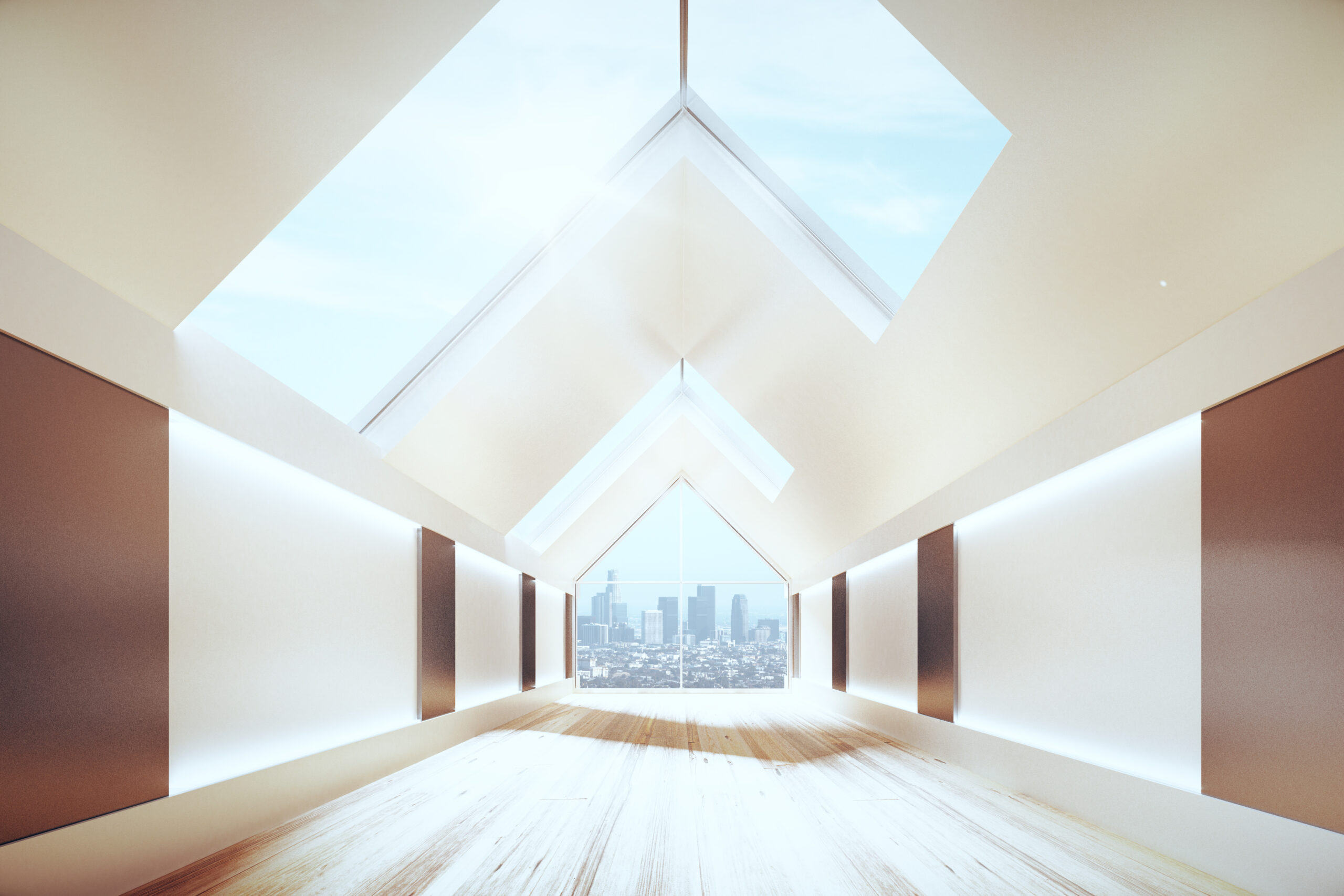
A ridge rooflight is a dual-pitched glazed unit that sits proud of the roof surface with a central apex, creating an architectural centrepiece that floods a room with natural light from multiple angles. Unlike a flat glass rooflight, which lies at a single shallow angle, a ridge rooflight rises to a peak, delivering a more dramatic effect and greater light volume. If you are planning an extension, open-plan kitchen, or garden room and want more than a standard skylight, a Ridgelight from GLRE Rooflights may be the right solution.
A ridge rooflight takes its name from its shape: a symmetrical dual-pitch profile with a raised central ridge, much like the apex of a conventional pitched roof. The glazed panels angle outward from either side of the ridge, allowing daylight to enter from two directions simultaneously.
This dual-angle design means a ridge rooflight captures light at different times of day, providing a more consistent and even illumination than a single-plane unit. It also adds visible height to a flat or low-pitched roof, creating a sense of volume and space inside the room below.
Ridge rooflights are typically installed on flat roofs or very low-pitched roofs where a conventional tiled ridge is not present. They sit on a structural upstand and are available in a range of widths and lengths to suit different aperture sizes.
Understanding how a ridge rooflight compares to other products helps you choose the right option for your project.
Ridge rooflight vs flat glass rooflight
A flat glass rooflight, also known as a mono-pitched rooflight, lies at a shallow angle across the roof. It is a clean, minimal option well-suited to bedrooms, bathrooms, and hallways. A ridge rooflight, by contrast, has a raised profile that makes it a focal point rather than a background feature.
Ridge rooflight vs pyramid rooflight
A pyramid rooflight rises to a central point from four sides, creating a square or rectangular lantern effect. A ridge rooflight is elongated along one axis, making it better suited to longer, narrower openings such as those found above a kitchen island or dining table.
Ridge rooflight vs lantern rooflight
A lantern rooflight typically has a more traditional rectangular frame with vertical glazed sides and a pitched top. Ridge rooflights offer a more contemporary, lower-profile alternative that suits modern architectural styles.
Quick comparison: ridge rooflight vs flat glass rooflight
| Feature | Ridge Rooflight | Flat Glass Rooflight |
| Roof type | Flat or low pitch | Flat or low pitch |
| Profile | Raised dual-pitch apex | Single flat plane |
| Light quality | Multi-directional | Directional |
| Visual impact | Architectural focal point | Clean and minimal |
| Ideal for | Open-plan spaces, extensions | Bedrooms, bathrooms, halls |
| Typical glazing | Double or triple glazed | Double or triple glazed |
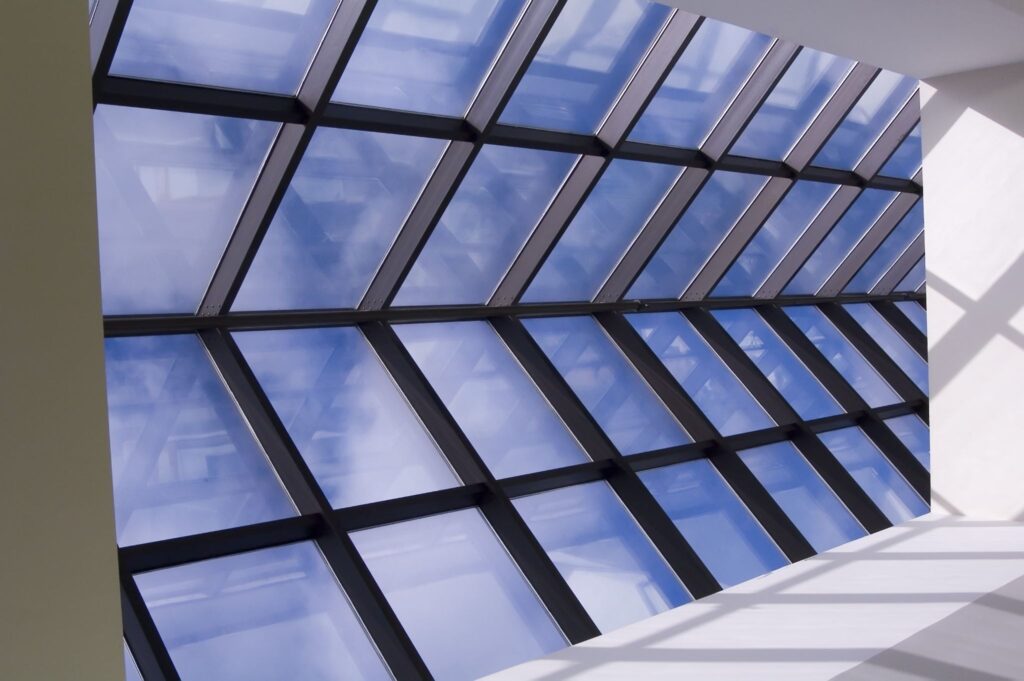
Ridge rooflights are particularly effective in spaces where both architectural drama and generous natural light are priorities.
A ridge rooflight running along the length of a single-storey kitchen extension is one of the most popular applications. The elongated form mirrors the footprint of a kitchen and delivers daylight across the full working and dining area. Combined with the right upstand height, it can transform a previously dark extension into one of the brightest rooms in a house.
Garden rooms benefit from the visual connection ridge rooflights create between the interior space and the sky. Because they allow light from two directions, they reduce the contrast between brightly lit and shadowed areas that can occur with a single-direction skylight.
In a rear or side-return extension used as an additional reception room, a ridge rooflight adds the sense of volume that makes a relatively modest footprint feel generous. The raised apex draws the eye upward, which increases the perceived ceiling height.
More formal structures such as orangeries or garden annexes benefit from the structured, architectural quality of a ridge rooflight. The defined apex creates a traditional roofline silhouette while using contemporary glazing technology for thermal efficiency.
The thermal and acoustic performance of a ridge rooflight depends primarily on its glazing specification. The main options are:
GLRE Rooflights manufactures its standard Ridgelight with high-performance glazing and offers bespoke specifications to meet specific project requirements.
In most cases, fitting a rooflight on a flat roof extension is covered by permitted development rights, meaning no planning application is required. However, there are circumstances where permission is needed:
It is always advisable to check with your local planning authority before proceeding. The Planning Portal provides guidance on permitted development rules for England and Wales.
Ridge rooflights are supplied as pre-assembled units that mount onto a structural upstand. The upstand is typically built by a contractor prior to the rooflight being fitted. Key installation considerations include:
GLRE’s standard Ridgelight units arrive pre-glazed and sealed, which simplifies on-site installation. For larger or bespoke configurations, a professional installation service is also available.
GLRE Rooflights is a UK-based rooflight manufacturer with over 50 years of combined expertise in architectural glazing. Every product in the GLRE range is backed by a 25-year quality guarantee and a price match promise, offering confidence alongside quality.
The GLRE Ridgelight is precision-engineered and available in a range of sizes, with bespoke dimensions available for non-standard openings. Orders are delivered nationwide for a flat delivery fee, regardless of size or quantity.
For projects requiring a non-standard shape, size, or glazing specification, the GLRE bespoke rooflight service provides a made-to-measure solution designed in collaboration with the GLRE team.
Ready to bring a ridge rooflight into your project? Get in touch with the GLRE team today and we will help you find the right size, specification, and glazing option for your space.