Need a rooflight for a listed building or conservation area? Discover planning rules, design requirements, and conservation rooflights from GLRE.

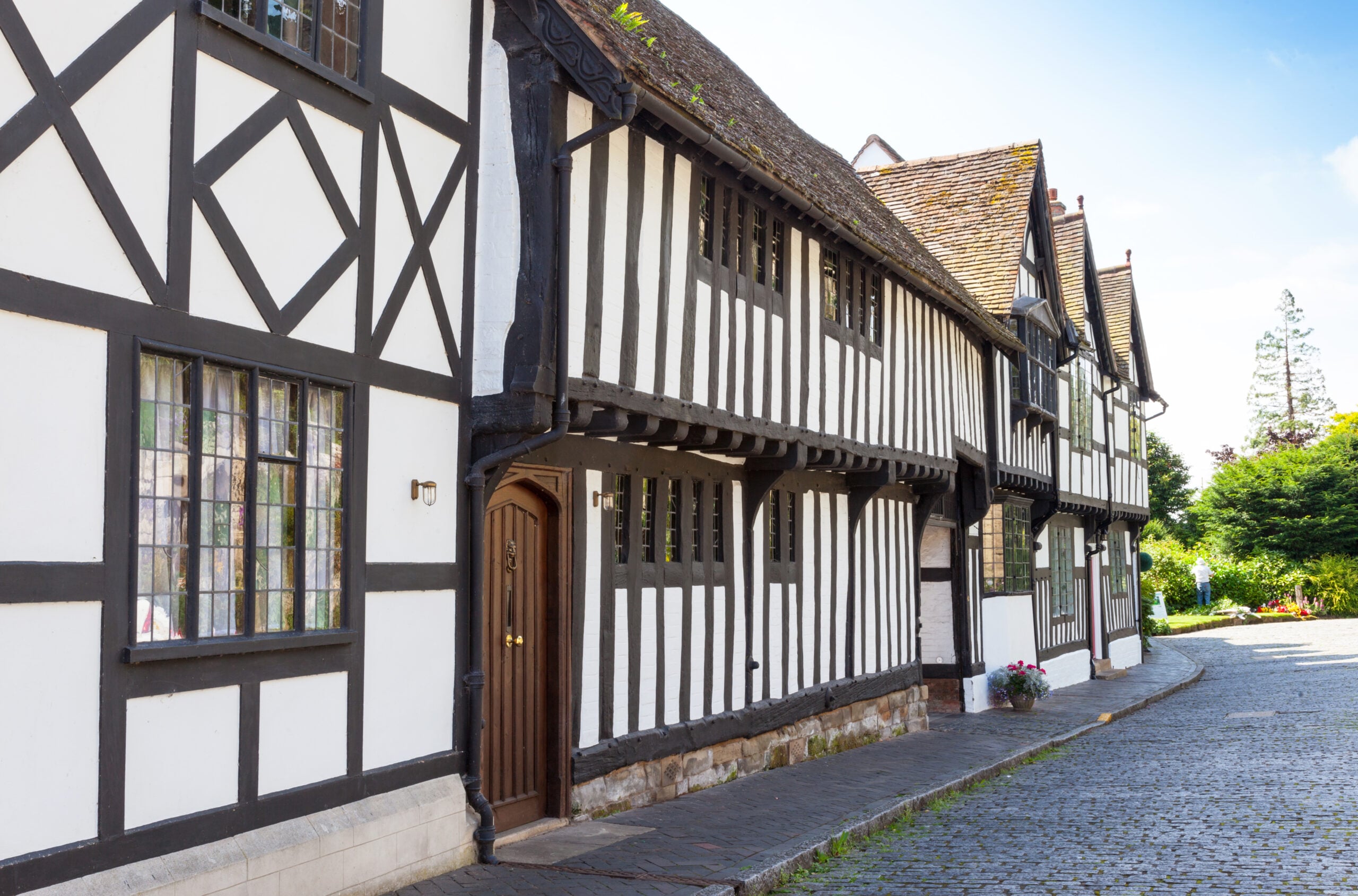
Conservation rooflights are low-profile, slim-framed glazed units designed to sit as unobtrusively as possible within a roof slope, making them the appropriate choice for listed buildings and properties in conservation areas. They allow natural light into a property while minimising visual impact on the character of the building and the surrounding area. If your property is listed or sits within a designated conservation area, a bespoke or conservation-specification rooflight from GLRE Rooflights is likely to be the most appropriate solution.
A conservation rooflight is a rooflight specifically designed to minimise its visual impact on a historic or sensitive roof. The key characteristics that distinguish a conservation rooflight from a standard unit are:
These features are intended to satisfy local planning authorities and heritage officers who require any alterations to a historic building or roofscape to be reversible and sympathetic to the original character of the structure.
Yes. Any alteration to a listed building that affects its character as a building of special architectural or historic interest requires Listed Building Consent, regardless of how minor the work appears. This applies to rooflights of any size, on any roof slope. Carrying out unauthorised works to a listed building is a criminal offence under the Planning (Listed Buildings and Conservation Areas) Act 1990, and the consequences can include enforcement action, reinstatement costs, and in serious cases, prosecution. You should always apply for Listed Building Consent before any rooflight is installed on a listed property. More guidance is available through
The application is made to your local planning authority (LPA). There is no fee for a Listed Building Consent application in England. When submitting, you will typically be expected to provide planning drawings, product specifications, and in some cases a heritage statement explaining how the proposed rooflight minimises harm to the building’s significance. Local authorities and Historic England generally favour a sympathetic approach: slim-framed, flush-fitting, low-reflectivity rooflights positioned on less prominent roof slopes are most likely to receive consent.
The answer depends on the slope of the roof and whether an Article 4 Direction is in place.
Under Class C of the Town and Country Planning (General Permitted Development) (England) Order 2015 (GPDO 2015), rooflights on rear roof slopes are generally still permitted development in conservation areas, meaning no planning application is required. The conditions that must be met for a rooflight to qualify as permitted development are:
If all conditions are met and no additional restrictions apply, no planning permission is required for a rear-facing rooflight in a conservation area.
Front-facing rooflights on designated land, including conservation areas, do require planning permission. This is one of the specific restrictions that applies on designated land under the GPDO 2015 and is separate from the rules that apply outside conservation areas.
An Article 4 Direction is an additional restriction that a local council can apply to remove specific permitted development rights. Article 4 Directions are common in conservation areas, and where one is in place it can mean that even rear-facing rooflights require a full planning application. You should always check with your local planning authority whether an Article 4 Direction applies to your property before assuming permitted development rights are available.
The table below summarises the general position for rooflight planning in England. This is a guide only; always verify with your local planning authority before proceeding.
| Property type | Planning permission needed? | Notes |
| Standard house (no restrictions) | Not usually | Permitted development under Class C, GPDO 2015 |
| Conservation area (rear slope) | Not usually | Class C still applies; check for Article 4 Directions |
| Conservation area (front slope) | Yes | Front-facing rooflights on designated land require permission |
| Listed building | Yes (always) | Listed Building Consent required; check with LPA |
| Flat or maisonette | Yes | Permitted development rights do not apply to flats |
Source: Town and Country Planning (General Permitted Development) (England) Order 2015, Class C, Part 1, Schedule 2.
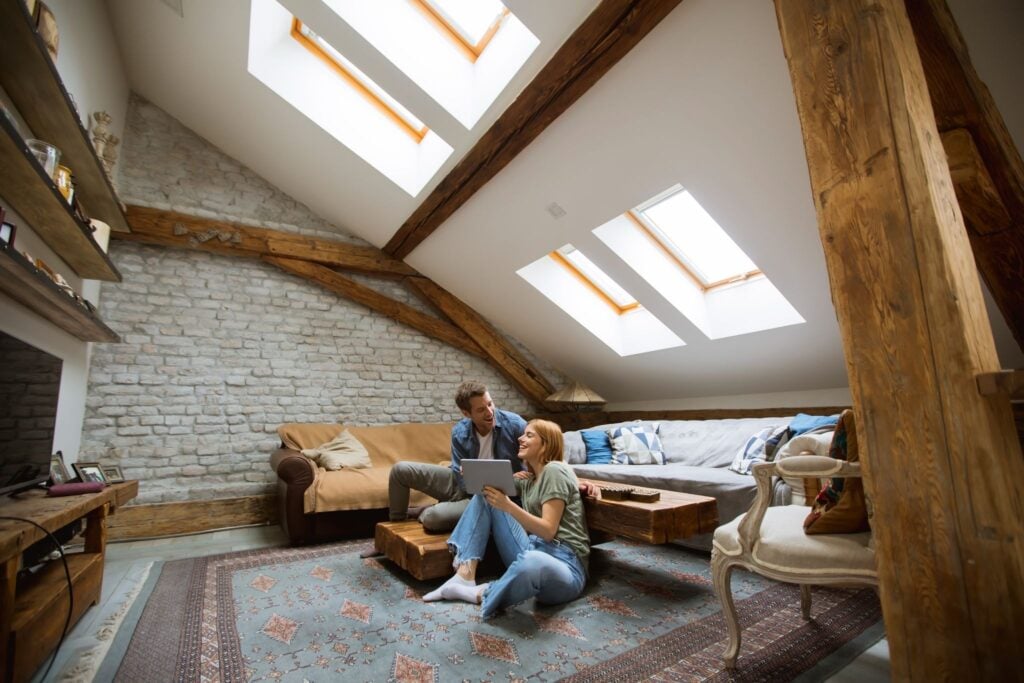
Yes. Planning permission and building regulations approval are separate legal requirements. Even where no planning application is needed, a rooflight installation is likely to require Building Regulations approval in England and Wales. The main areas covered by Building Regulations for rooflights are:
Your local authority’s building control team can confirm the specific requirements for your project. Building Regulations approval is separate from Listed Building Consent and both may be required for a listed building.
The design of a conservation rooflight matters as much as its technical performance, because local planning officers and heritage consultants will assess the visual impact of the installation when reviewing a Listed Building Consent application or a planning application for a front-facing rooflight in a conservation area.
The characteristics that local authorities and Historic England typically look for in a sympathetic rooflight design include:
For non-standard requirements, GLRE’s bespoke rooflight design and build service allows frame dimensions, finishes, and glazing specifications to be tailored to the exact requirements of the project. This is particularly valuable for listed buildings, where the rooflight may need to fit a non-standard aperture or match a specific material finish.
While GLRE’s standard rooflights are supplied pre-assembled and pre-glazed to simplify self-installation, a listed building project involves additional responsibilities that go beyond fitting the unit. These include preparing and submitting a Listed Building Consent application, coordinating with building control, and in some cases engaging a heritage consultant.
For bespoke or complex installations, GLRE offers a professional installation service. Full details of the GLRE design, build, and install process are available on the GLRE bespoke service page.
GLRE Rooflights is a UK manufacturer with over 50 years of combined expertise in architectural glazing, serving residential, commercial, and heritage projects across the country. The GLRE team works directly with architects, designers, and homeowners to develop rooflight solutions that meet both the performance requirements and the design standards needed for sensitive applications. All GLRE rooflights are backed by a 25-year quality guarantee, and the bespoke service covers the full process from initial CAD design through to installation.
If you are working on a project in a conservation area or involving a listed building and need a rooflight that can be specified to meet heritage requirements, the GLRE bespoke rooflight service provides the design flexibility and manufacturing precision that these projects demand.
Planning a rooflight for a listed building or conservation area property? Contact the GLRE team today and we will help you find the right specification for your project.