Find out when you need a manual access hatch rooflight, what to specify, and how to plan installation. Get a quote from GLRE today.

A manual access hatch rooflight gives you safe, permanent access to a flat roof through your ceiling, combining the function of a roof hatch with the light transmission of a quality rooflight. If you have a flat roof area above a room, a utility space, or a commercial building that requires routine maintenance, a manual access hatch is likely to be the most practical and cost-effective solution.
This guide covers everything you need to know: the common situations that require roof access, how a manual access hatch differs from other rooflights, what to look for when specifying one, and how to plan for installation.
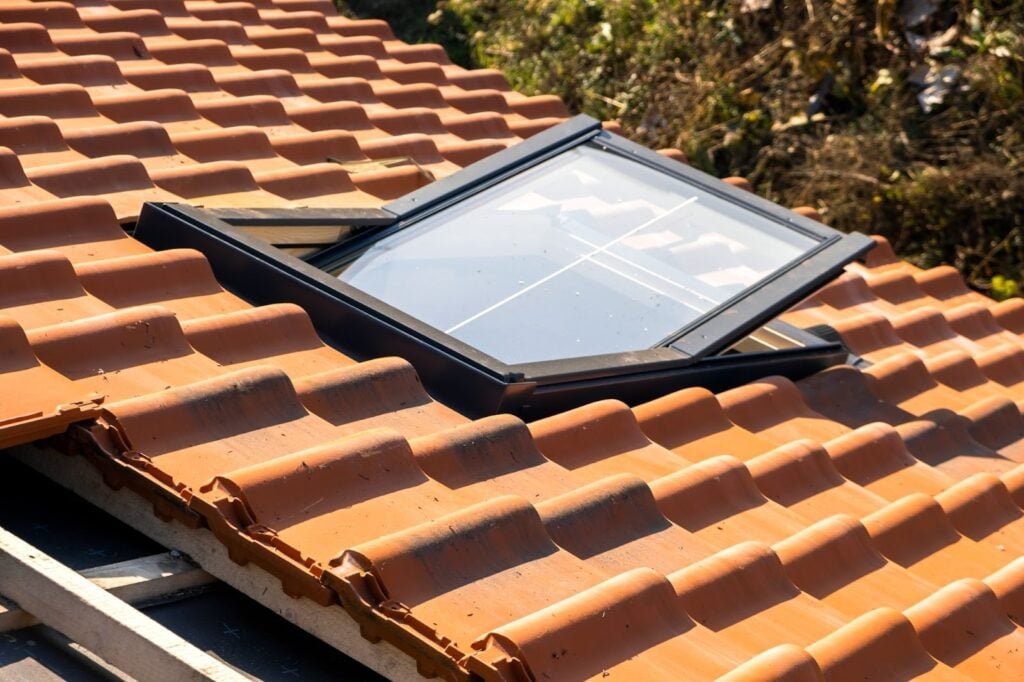
A manual access hatch rooflight is a hinged rooflight unit designed to open wide enough for a person to pass through. Unlike fixed or venting rooflights that are purely for light and air, an access hatch serves as a functional entry and exit point to the roof.
The GLRE Manual Access Hatch Rooflight opens to a full 70 degrees, providing a clear, unobstructed opening to your roof space. It is pre-glazed and arrives as a complete unit, ready for installation onto a prepared upstand.
As with all GLRE rooflights, it is precision-engineered from quality materials and carries a 25-year guarantee, giving you confidence in both the structural and weatherproofing performance of the unit long-term.
Roof access is often an afterthought during a build or renovation, but the need for it becomes clear very quickly once a building is in use. Here are the most common situations where a manual access hatch rooflight is the right specification.
Commercial and residential buildings with rooftop plant, HVAC units, solar panels, or satellite dishes require regular inspection and maintenance. A roof access hatch allows engineers and maintenance personnel to reach the roof safely without the need for scaffolding or external access platforms each time.
For any building where rooftop equipment is serviced more than once a year, a permanent internal access point is far more practical and cost-efficient than relying on external access solutions.
Loft conversions with flat roof sections often benefit from an access hatch, both for the construction phase and for long-term maintenance of the roof membrane, drainage, and any rooflights installed above. Roof windows and loft conversions go hand-in-hand, and adding a discreet access hatch during the build is far simpler than retrofitting one later.
Green roofs require periodic maintenance including weeding, checking drainage layers, and inspecting root barriers. A manual opening rooflight with hatch functionality gives building managers a practical, weathertight access point without compromising the integrity of the roof build-up.
Commercial buildings have more stringent maintenance obligations than domestic properties. A dedicated roof access point supports compliance with Health and Safety at Work obligations by enabling safe working at height through a fixed, internal access route rather than improvised external solutions.
In certain layouts, particularly where loft rooms or upper-floor commercial spaces have limited staircase egress, a roof access hatch can form part of a fire escape or emergency exit strategy. This should always be confirmed with a qualified fire safety engineer and your local building control authority before specification.
It is worth distinguishing between the different types of opening rooflights, as they are designed for different purposes.
| Rooflight Type | Primary Purpose |
| Manual Access Hatch | Human access to roof; wide opening for egress |
| Manual Vent Rooflight | Ventilation and fresh air; not designed for access |
| Electric Vent Rooflight | Automated ventilation at the touch of a button |
| Fixed Rooflight (Mono-Pitched) | Maximum natural light; no opening |
| Walk-On Rooflight | Structural glazing for walkways; not for egress |
If you need both light and access from the same opening, a manual access hatch is the correct unit to specify. If you only need ventilation, a manual vent rooflight or electric vent rooflight will typically be more cost-effective.
Not all access hatch rooflights are created equal. When evaluating your options, the following factors should guide your decision.
The opening angle determines how easy it is to pass through safely. A minimum of 70 degrees is recommended to allow a person carrying tools or equipment to enter and exit the roof without difficulty. Anything narrower than this may create a practical hazard, particularly for maintenance workers.
Access hatches should use safety glazing as standard. Laminated inner panes are required under Building Regulations for overhead glazing in England and Wales, ensuring that if the glass is impacted, it holds together rather than shattering. If the hatch is in an area where thermal efficiency is a priority, consider a double glazed unit to reduce heat loss through the opening.
A correctly specified upstand is critical to the weathertight performance of any flat roof rooflight. GLRE rooflights are engineered to allow a 5mm tolerance either side of the frame, enabling the inner wall to be plastered flush to the edge of the upstand with no visible frame from inside. If you need help finding a contractor to build the upstand, GLRE can put you in touch with a recommended local installer.
If your access hatch opens onto a roof that is accessible from below by third parties, check that the unit has a locking mechanism. This is particularly important for commercial buildings and any roof hatch at ground or first-floor level.
A manual access hatch is opened by hand, so the weight of the glazed unit matters. Pre-glazed units should include gas struts or counterbalance mechanisms to make the opening action safe and manageable for a single person. Check the product specification before ordering, particularly if the hatch will be used frequently.
In most cases, installing a roof access hatch on a flat roof does not require planning permission, provided it falls within Permitted Development rights for your property type. However, the following situations may trigger the need for a formal application:
Building Regulations approval is a separate matter from planning permission. Any new rooflight, including an access hatch, must comply with Part L (energy efficiency) and Part K (protection from falling) of the Building Regulations. GOV.UK provides current guidance on Permitted Development rights for householders, and your local planning authority can advise on any local restrictions.
GLRE’s manual access hatch rooflights are pre-glazed and arrive as a single complete unit, which simplifies installation considerably. The general process is as follows:
For bespoke or large installations, GLRE offers an installation service for an additional fee. For standard units, a competent builder or roofing contractor can carry out the installation following the product documentation.
If you are considering a bespoke access solution, such as an oversized hatch or one with non-standard glazing, the GLRE bespoke rooflight service can design a unit to your exact specification.
This is a common source of confusion. A roof window, as used in pitched roof loft conversions, is a different product category to a flat roof access hatch. The key differences are:
If you are working on a pitched roof loft conversion and need ventilation or light rather than access, a manual vent or fixed rooflight on a flat-roof extension adjacent to the pitched section may be the more appropriate specification.
Here is a concise summary of what a manual access hatch rooflight is best suited for:
For situations where access is not required but ventilation is the priority, see the full GLRE opening rooflights range for the right specification.
Ready to specify a manual access hatch rooflight for your project? Get in touch with the GLRE team today and we will help you find the right solution for your roof.