These characterful properties face a common challenge: creating additional living space whilst maintaining adequate natural light in inherently narrow floor plans. Rooflights are the answer.

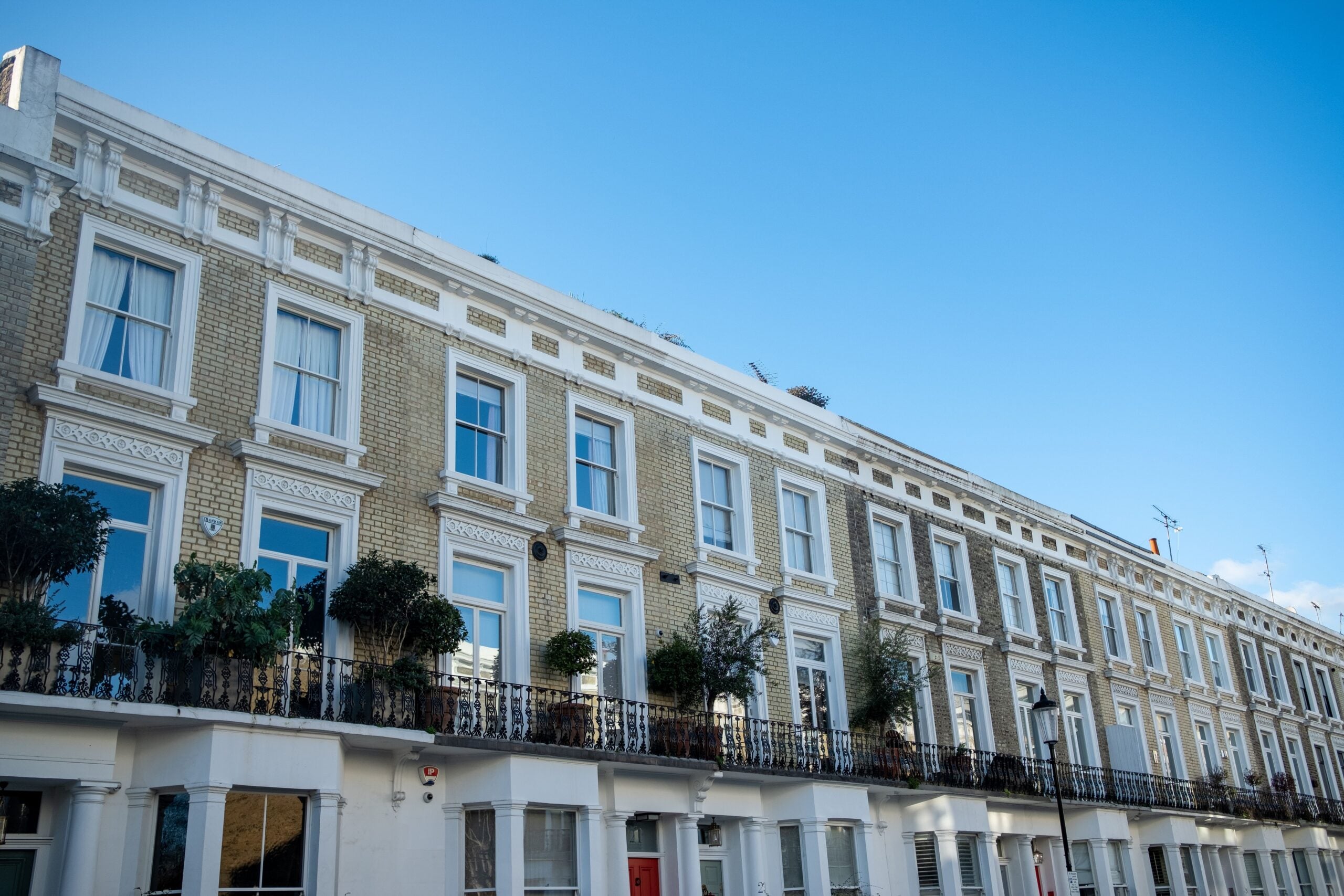
London’s Victorian and Georgian terraced houses dominate the capital’s residential landscape, representing nearly 30% of UK housing stock. These characterful properties face a common challenge: creating additional living space whilst maintaining adequate natural light in inherently narrow floor plans. Rooflight specification for terrace extensions has evolved from afterthought to essential design consideration, directly determining whether extensions feel bright and welcoming or cramped and cave-like.
Victorian terrace architecture prioritised street-facing principal rooms, relegating rear spaces to utilitarian functions with minimal glazing. The typical rear outrigger—a single-storey projection occupying only part of the property width—creates a narrow side passage known as the side return. When homeowners extend into this space, they inherit the original design flaw: insufficient natural light reaching interior zones.
Side return extensions typically measure just 1-1.2 metres wide, creating long, tunnel-like additions that can feel oppressively dark without overhead glazing. The party wall boundary eliminates any possibility of side windows, whilst the original rear wall loses its garden-facing window when incorporated into the extended space. Rooflights become the primary—often only—source of natural light for the central portions of these extensions.
Building Regulations glazing requirements:
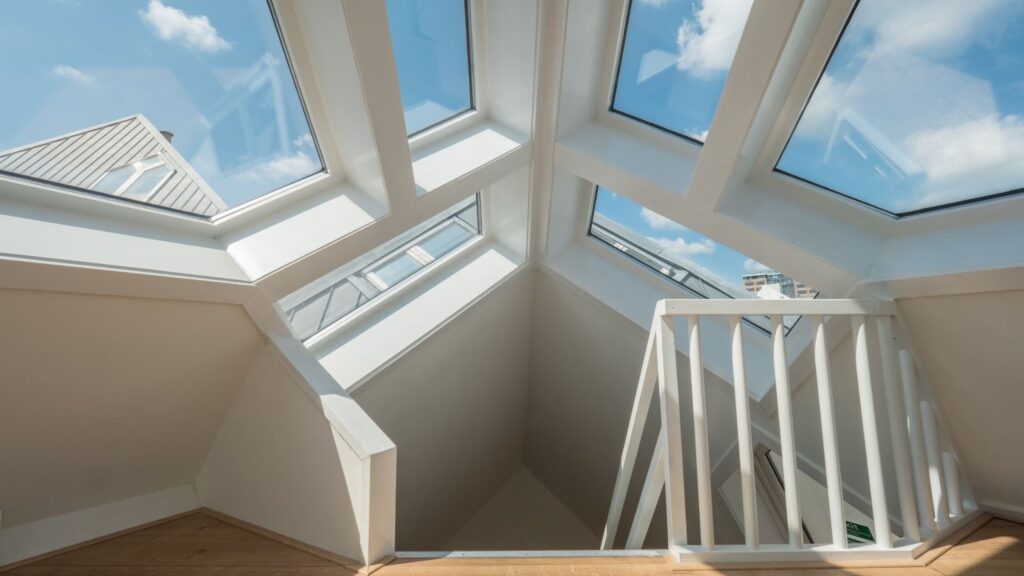
Flat glass rooflights dominate London terrace extension specifications for compelling practical reasons:
The flat roof construction typical of terrace extensions naturally accommodates flat rooflights without requiring pitched upstands. GLRE Rooflights’ mono pitched designs suit these installations perfectly, mounting directly onto flat roofs with 5-15 degree pitches whilst maintaining the clean lines that planning officers favour in conservation areas. Pre-assembled and pre-glazed, these units arrive ready for installation, eliminating on-site glazing risks that could compromise weather-tightness in restricted-access terrace plots.
Walk-on glass rooflights serve specialist applications where terrace extensions create usable roof space above. Basement conversions beneath side returns particularly benefit from walk-on specifications, allowing natural light to penetrate two storeys whilst providing structural flooring at ground level. The anti-slip glass surface withstands foot traffic whilst maintaining the transparency essential for effective light transmission to lower levels.
For extensions with adequate ceiling height, pyramid or lantern rooflights introduce architectural drama whilst distributing light from multiple angles. These raised structures prove particularly effective in larger wraparound extensions combining side return and rear projections, where their elevated position prevents the “bowling alley” effect that purely horizontal glazing can create in long, narrow spaces.
Most London terrace side return extensions fall within Permitted Development Rights, allowing construction without planning permission provided they meet specific parameters:
Rooflights themselves rarely trigger planning requirements if they remain within 150mm of the existing roof plane and don’t exceed the roof’s highest point. This provision allows flat rooflights to integrate seamlessly into extension designs covered by Permitted Development. However, conservation areas impose stricter controls—any external alteration visible from public viewpoints may require planning consent, regardless of Permitted Development status elsewhere.
Party Wall Act compliance remains mandatory regardless of planning status. The 1996 Act requires homeowners to serve notice on adjoining neighbours when building on or near shared boundaries, as side return extensions inevitably do. Specifying rooflights that drain away from party walls rather than towards them can smooth party wall negotiations, as drainage patterns affecting neighbours’ properties represent legitimate concerns that surveyors address during assessments.
Listed buildings and conservation areas demand particular sensitivity in rooflight selection. Planning officers favour designs that maintain heritage character—slim aluminium frames in traditional slate grey or bronze finishes typically receive more sympathetic consideration than contemporary black frameworks or oversized glazing panels. Understanding local planning precedents proves invaluable; identifying approved rooflight installations on similar terrace properties within the same conservation area provides evidence supporting your application.
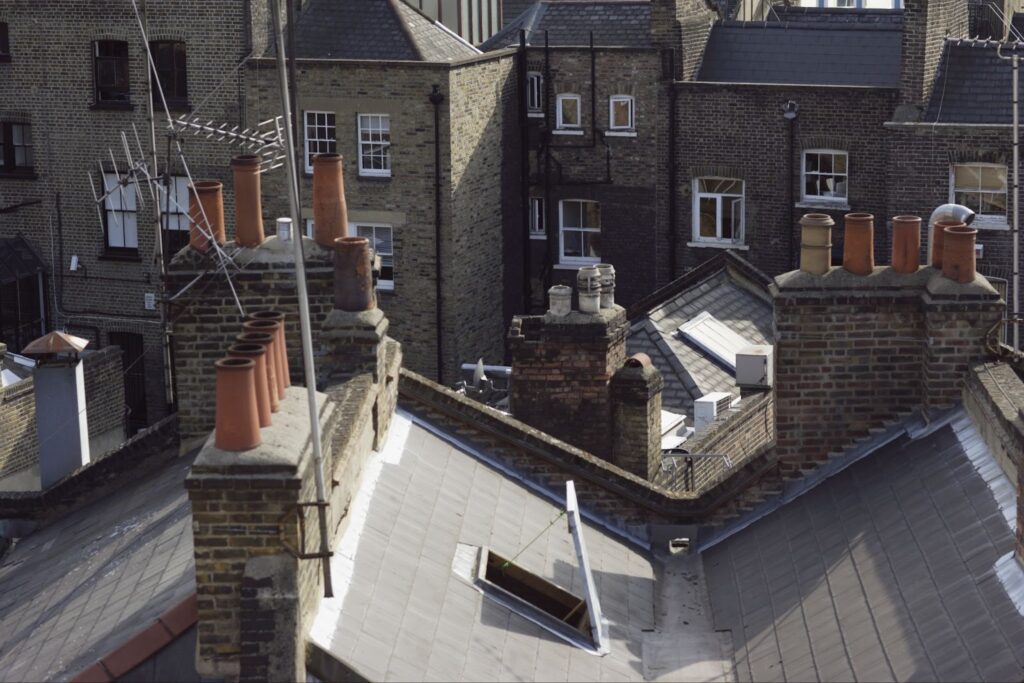
Continuous structural glass roofs spanning the entire side return length deliver maximum light transmission, effectively creating a glass corridor that connects the house interior with the garden beyond. This approach eliminates framework interruptions that cast shadows, flooding extensions with uninterrupted natural light throughout the day. However, full structural glass systems command premium pricing and require specialist installation, placing them beyond many renovation budgets.
Multiple smaller rooflights within a solid roof structure offer cost-effective alternatives whilst maintaining substantial light levels. Strategic positioning matters enormously:
Optimal glazing coverage:
Rooflight orientation significantly affects light character throughout the day. South-facing rooflights capture maximum solar gain, flooding spaces with bright illumination but potentially causing overheating during summer afternoons. North-facing installations provide consistent, diffused light without direct sun glare, particularly beneficial for home offices where screen visibility matters. East-facing rooflights bring morning brightness to breakfast areas, whilst west-facing options deliver afternoon and evening light to dining zones.
Full-width bifold or sliding doors across the rear elevation represent standard specification for London terrace extensions, creating the garden connection that motivates most projects. Rooflights complement this vertical glazing by addressing the ceiling plane, effectively surrounding occupants with natural light from multiple directions. This comprehensive glazing strategy transforms previously dark rear rooms into bright, airy spaces that feel substantially larger than their actual dimensions.
The interplay between vertical and overhead glazing creates layered lighting effects throughout the day. Morning sun entering through east-facing doors combines with overhead illumination from rooflights, eliminating harsh shadows that single-source lighting creates. As the sun tracks westward, rooflights maintain consistent brightness even when direct sunlight no longer reaches vertical windows—critical for north-facing gardens where rear doors receive limited direct sun exposure.
High-level windows above bifold doors provide additional light whilst maintaining privacy from neighbouring properties. Combined with rooflights, this creates triple-aspect glazing that brings natural light from rear walls, side walls (where possible), and ceiling planes simultaneously. Victorian terraces with tall ceiling heights particularly benefit from this approach, as high-level glazing channels light deep into extension interiors whilst remaining above fence lines that might otherwise restrict lower window effectiveness.
Internal glazing extending into the original house amplifies rooflight effectiveness. Glass doors or partition walls between extended and existing spaces allow natural light from rooflights to penetrate throughout the ground floor, brightening hallways and front rooms that previously felt dark and disconnected from rear additions. This “light borrowing” maximises the return on rooflight investment by spreading illumination beyond the immediate extension footprint.
Standard double glazing specifications:
Triple glazing upgrade:
Solar control glass deserves consideration for south-facing rooflights where summer overheating presents genuine risk. These specialist coatings reduce solar heat gain by up to 70% whilst maintaining acceptable light transmission levels—typically 40-50% compared to 80%+ for standard glass. The trade-off between heat control and brightness requires careful assessment; extensions used primarily during evenings may prioritise maximum light over solar control, whilst home offices occupied during peak afternoon sun hours benefit significantly from heat-reducing specifications.
Self-cleaning glass coatings utilise hydrophilic technology that breaks down organic dirt through UV activation, then allows rainwater to sheet away debris rather than leaving dried spots.
Self-cleaning glass benefits:
Toughened and laminated safety glass combinations ensure rooflights meet structural requirements for overhead installations. Toughened outer panes resist impact and thermal stress from temperature fluctuations, whilst laminated inner panes provide fail-safe protection—if breakage occurs, the laminate interlayer holds glass fragments in place rather than allowing them to fall into occupied spaces below. Building Regulations mandate these safety specifications for all overhead glazing regardless of installation height.
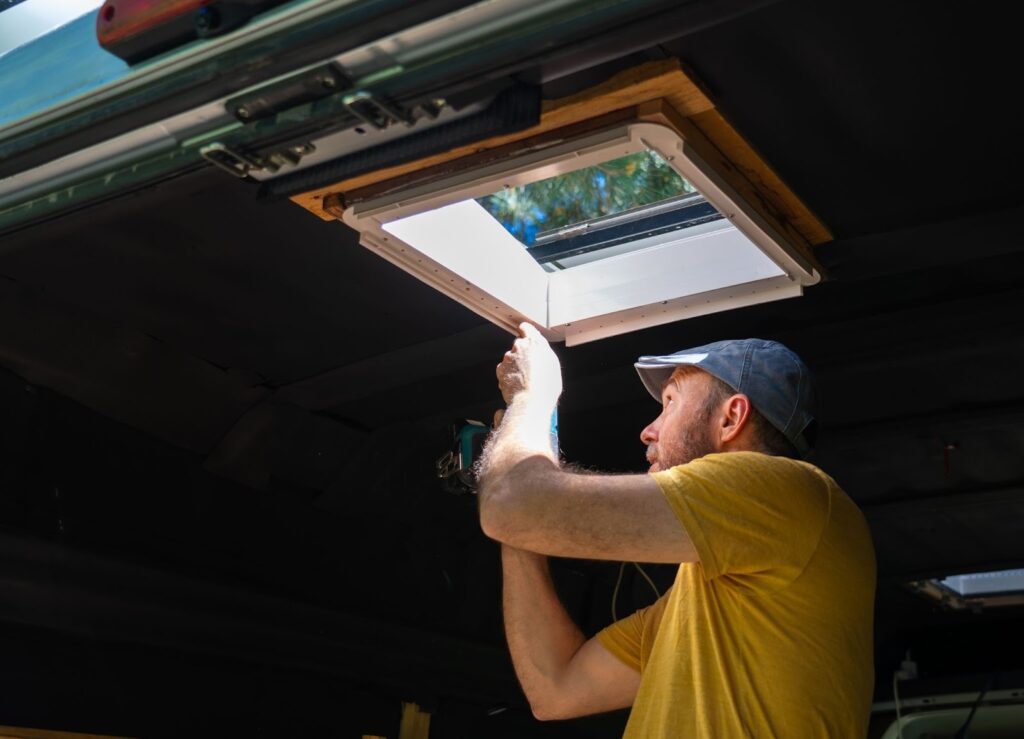
London terraced properties present unique logistical challenges that directly influence rooflight selection. With no side access, all materials must pass through the house interior or be crane-lifted over the building. Pre-assembled rooflight units weighing 100-200kg require careful handling through Victorian hallways with tight corners, narrow doorways, and potentially listed features that cannot sustain damage during installation.
Crane hire considerations:
The restricted working envelope within terrace plots influences installation methodology. Scaffolding must often cantilever over neighbouring gardens or rely on party wall agreements for temporary support structures. Weather-dependent sealing operations face higher risk in exposed urban locations where work stoppages extend project timelines. These practical constraints favour rooflight designs with proven weather-tightness track records and comprehensive manufacturer support during installation phases.
Building material protection during transit through occupied homes adds hidden costs and stress. Heavy-duty floor coverings, door frame protection, and careful coordination with homeowners living on-site throughout renovations all contribute to project complexity. Rooflights delivered in robust packaging that withstands these demanding handling conditions prevent damage-related delays that could stall entire projects awaiting replacement units.
Fixed rooflights offer simplicity and weather-tightness, relying entirely on rear doors for ventilation. This approach suits extensions where large bifold or sliding doors open frequently during mild weather, naturally ventilating spaces without requiring mechanical intervention. However, during cold months when doors remain closed, fixed rooflights contribute to moisture build-up and poor air quality—particularly problematic in kitchen extensions where cooking generates substantial humidity.
Opening rooflights introduce controllable ventilation that operates independently of doors, allowing air circulation during winter without creating uncomfortable draughts at occupant level. Manual opening mechanisms suit smaller installations where occasional ventilation suffices, whilst electric operation proves worthwhile for larger or multiple rooflights where coordinated opening improves effectiveness. Rain sensors automatically close electric rooflights when precipitation begins, providing peace of mind for homeowners absent during sudden weather changes.
Building Regulations Part F ventilation requirements stipulate minimum air change rates for habitable rooms. Whilst opening doors may provide adequate ventilation during temperate seasons, winter months demand alternative strategies. Opening rooflights positioned high in the ceiling plane create stack effect ventilation—warm, stale air naturally rises and exhausts through roof openings whilst fresh air enters through lower-level inlets. This passive system requires no energy input whilst maintaining air quality throughout heating seasons.
Trickle vents integrated within rooflight frames offer continuous background ventilation without compromising security or weather protection. These controllable openings allow modest air exchange rates sufficient for moisture control and air quality maintenance, operating silently and unobtrusively compared to mechanical extract systems. For habitable rooms where Building Regulations mandate minimum ventilation provision, trickle vents provide compliant solutions that integrate seamlessly within rooflight specifications.
London’s urban heat island effect moderates temperature extremes compared to rural locations, reducing heating demands during winter whilst potentially increasing cooling requirements during summer. Rooflights contribute significantly to overall extension thermal performance—poorly specified units can account for 30-40% of total heat loss despite representing only 15-20% of surface area.
Thermal performance benchmarks:
Thermally broken aluminium frames prevent cold bridging—the phenomenon where metal framework conducts heat directly from interior to exterior, creating condensation risks and localised heat loss. Quality manufacturers incorporate polyamide thermal breaks within frame profiles, effectively separating internal and external aluminium surfaces. This detail proves particularly important in London’s humid urban climate, where condensation on cold surfaces promotes mould growth and material deterioration.
Argon gas filling between double glazing panes improves insulation compared to standard air-filled units, reducing U-values by approximately 0.2 W/m²K. This inert gas conducts heat less efficiently than air whilst maintaining optical clarity—an invisible upgrade that delivers measurable energy savings. The gas-tight seals required to retain argon also improve acoustic insulation, reducing traffic noise intrusion that affects many London terrace locations near busy roads.
Warm edge spacer bars separating glass panes within sealed units prevent edge condensation that plagues cheaper aluminium spacers. These composite or stainless steel components conduct minimal heat compared to traditional aluminium, maintaining higher internal surface temperatures around glass edges where condensation typically initiates. For London installations where high humidity from cooking and bathing creates condensation-prone conditions, warm edge technology prevents the moisture damage that undermines rooflight longevity.
London’s atmospheric pollution deposits particulate matter and organic compounds onto rooflight surfaces, gradually reducing light transmission and creating visually unappealing grime build-up.
Standard glass maintenance:
Self-cleaning glass maintenance:
Seal and gasket inspection:
Drainage channel maintenance prevents blockages that cause water pooling and potential ingress:
Rooflight specification represents the critical factor determining whether London terrace extensions deliver bright, welcoming living spaces or merely add square metres without enhancing quality of life. The confined dimensions and restricted natural light inherent in terrace architecture demand overhead glazing solutions that work within tight budgets, complex planning frameworks, and challenging installation logistics unique to dense urban environments.
Successful installations balance competing priorities: maximising natural light whilst controlling solar gain, achieving slim sightlines whilst maintaining structural integrity, providing adequate ventilation without compromising security. Products specifically designed for flat roof applications, delivered pre-assembled for efficient installation, and backed by comprehensive warranties offer the reliability that complex terrace projects demand.
For homeowners investing substantial sums transforming characterful Victorian and Georgian terraces into contemporary family homes, rooflights represent the single specification decision with greatest impact on daily living experience. Natural light affects everything from mood and productivity to heating costs and property values—making informed rooflight selection essential rather than optional.
Our flat glass and mono pitched designs deliver exceptional natural light whilst meeting planning requirements for urban installations. Pre-assembled units simplify installation in restricted-access terrace plots, backed by 25-year warranties and competitive pricing. Explore our rooflight range or contact our team to discuss your London extension project requirements.